
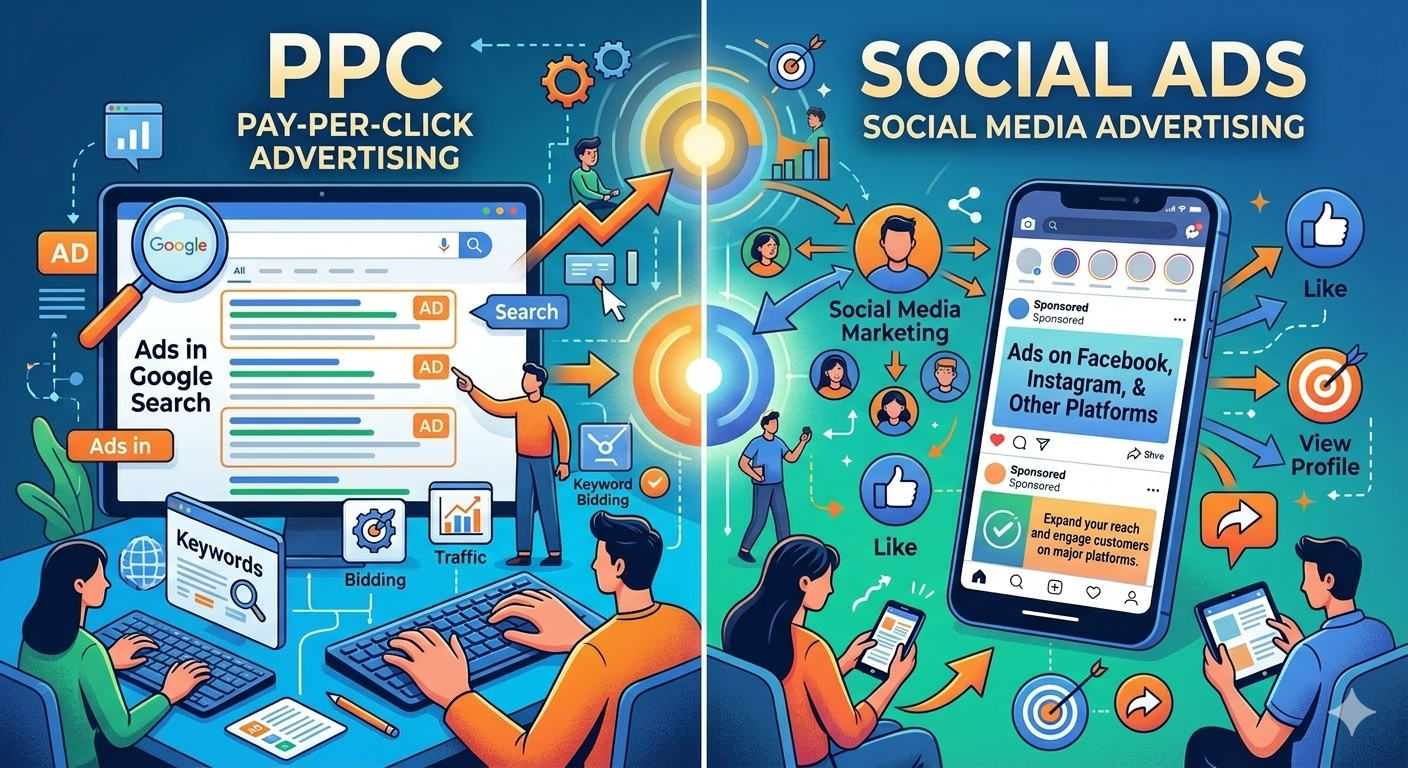
Digital marketing that is purchased is composed of 2 fundamental pillars: pay per click (PPC) and social advertising. Although both of these are strategies for buying rather than producing organic traffic, they have different philosophies for sourcing, which is evidenced by the difference in sourcing ideas using search (intent-based) versus using social media (interest-based). The most frequent occurrence of PPC advertising occurs with search engines through their advertising platforms (i.e. Google Ads). When you advertise using PPC, you will be charged for every click on your ad through an online advertisement.
Three Key Elements Make Up An Auction Process
An auction occurs whenever an individual conducts a search. Google will use the Bid (The maximum price that you will pay) and Quality Score (The relevance and experience of landing pages) of your ad in determining your ad rank.
Keywords: This is the basis of everything. Target keywords that are “commercial intent”, (i.e. purchasing digital marketing service), so that you can reach users that are prepared to convert.
Ad Extensions: This is another way to supply additional information to your ad(s), including things such as Phone Numbers, Links to Locations, or Deep Links to Particular Pages on Your Website.
Key Performance Indicators
CTR: Percentage of people seeing an ad and visiting the URL of the ad by clicking.
CPC: Actual amount you will pay for one click.
CPA: What you spent on advertising for one lead or sale.
Social ads include placing advertisements on social media sites like Facebook, Instagram, LinkedIn, and TikTok. These ads are different from PPC ads, which are only presented to users who are actively looking for a product or service; social ads are inserted into the user’s social media feeds based on user demographics, interests, and behaviors.
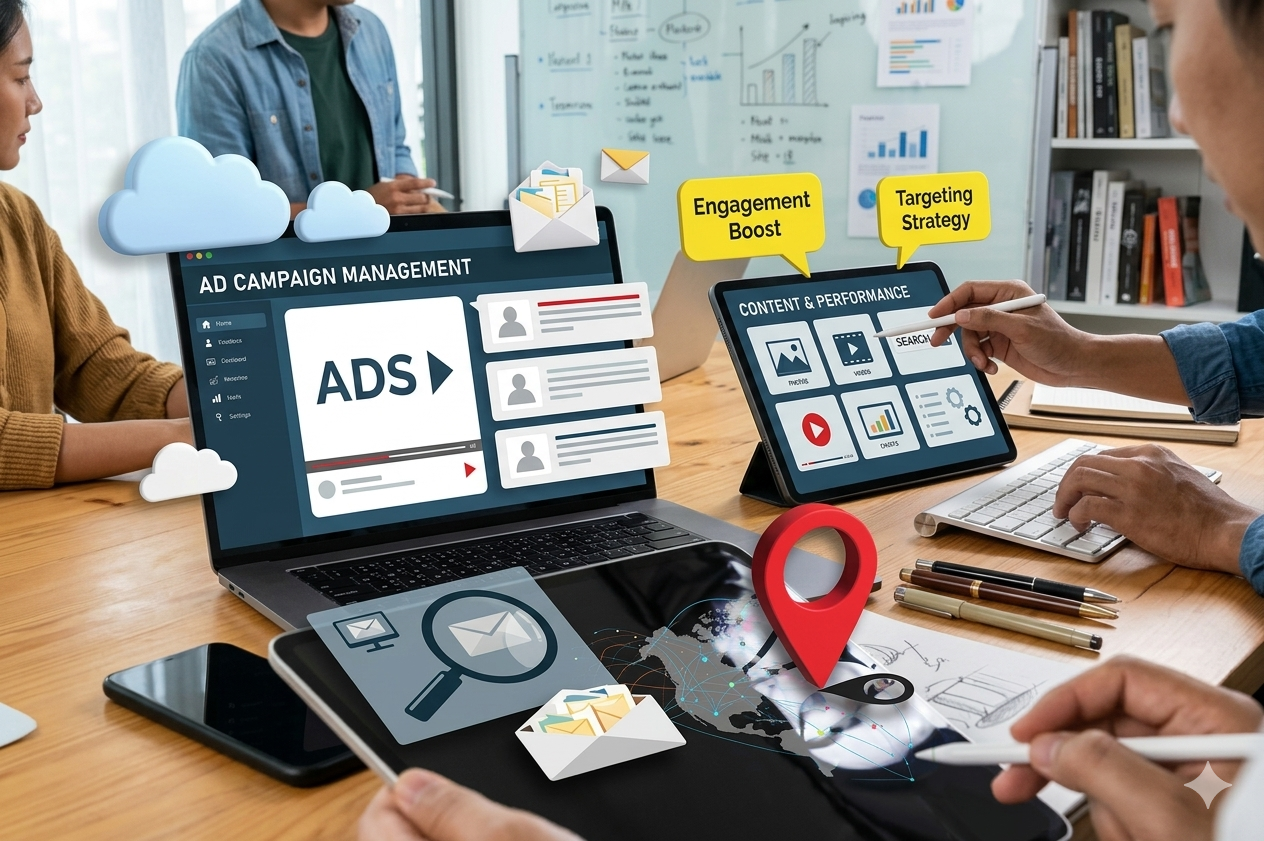
Social Media Marketing (SMM)
Social ads include placing advertisements on social media sites like Facebook, Instagram, LinkedIn, and TikTok. These ads are different from PPC ads, which are only presented to users who are actively looking for a product or service; social ads are inserted into the user’s social media feeds based on user demographics, interests, and behaviors.
Targeting Options Multiple options allow advertisers to find their target audience; this method of targeting is very accurate and detailed compared to other online marketing methods such as PPC.
Demographic Targeting: Including (Demographics) Age (demographics) & Gender (demographics) and household income (demographics) and Job Title (Demographics).
Interest Targeting: Including (Interests) and/or Hobbies (Interests) and/or Companies Followed (Interests) and/or Brands Liked (Interests)
Behavioral Targeting: Purchasing Behavior (Behavior), Travel Behavior (Behavior), and Device Usage (Behavior).
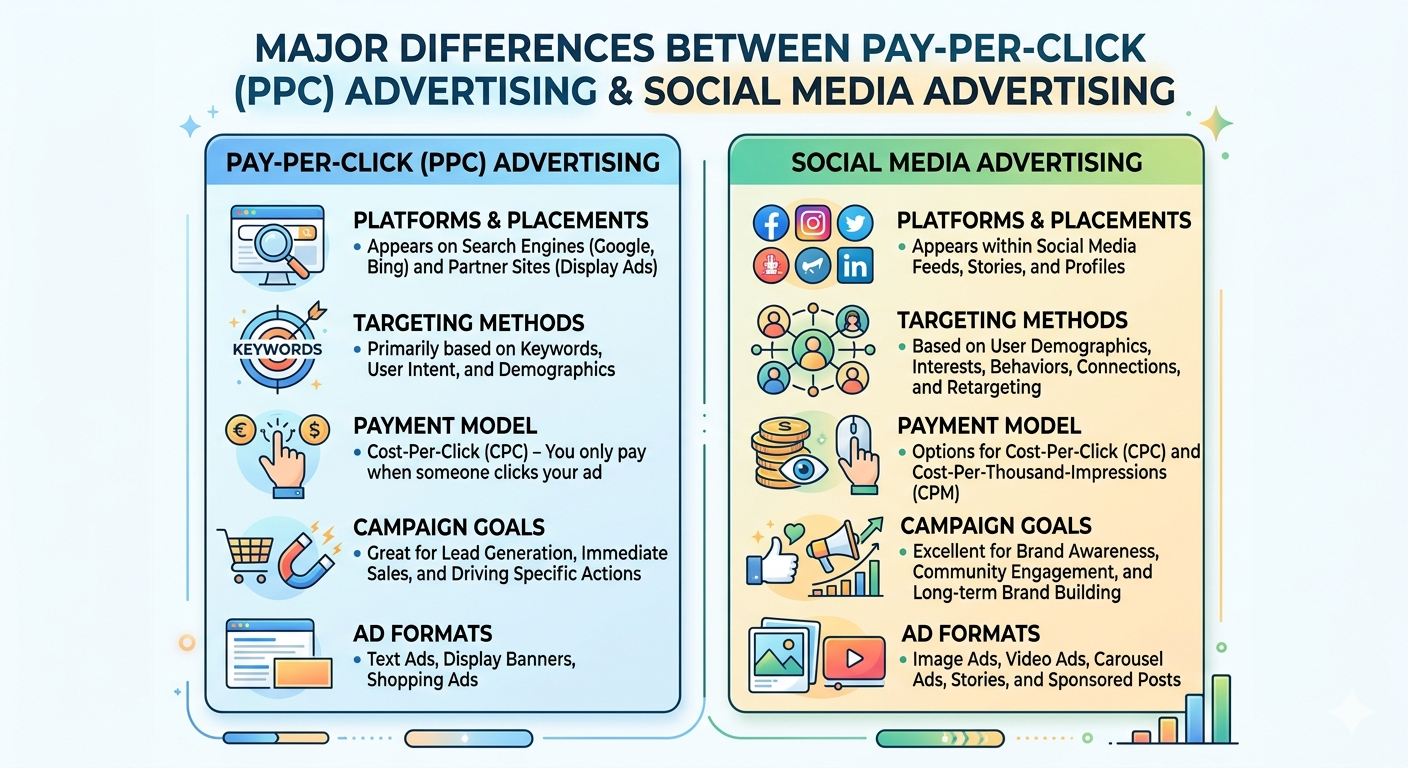
The Key Differences
In choosing a right strategy, understanding “why” the click happened is crucial:
Intention: For Example: In PPC, users are actively searching for a solution to their problems; and In Social Ads, you create demand by providing a product/service they have yet not thought of.
Visuals: PPC is predominantly text-heavy although there are some Display Ad placements; while Social Ads mainly rely on high-quality images and videos.
Cost: Typically, PPC costs per click are more expensive per keyword when compared to social media;but PPC can generate a higher quality lead because they have initiated the shopping search.
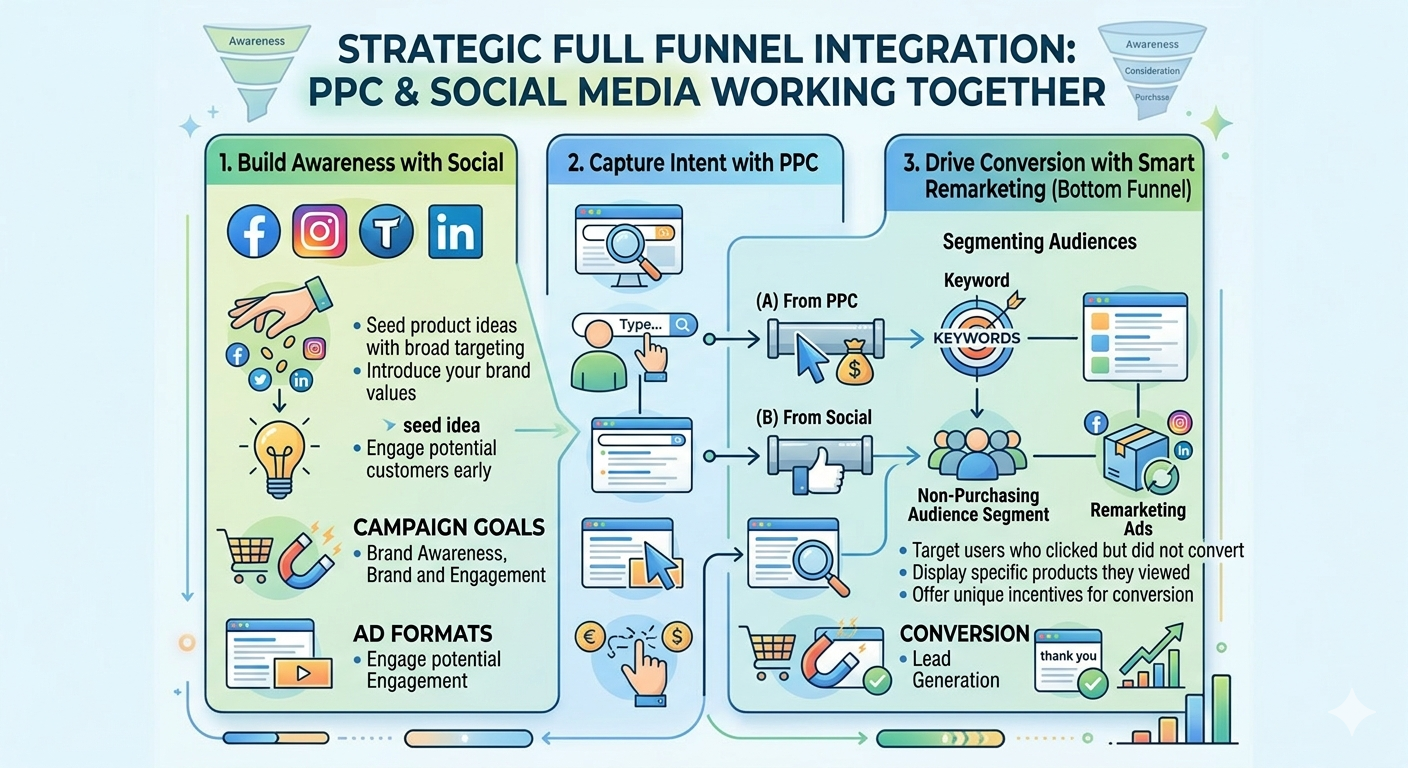
Strategic Integration
The most successful marketing strategies utilize both social advertising and PPC to create a “full funnel” system.
Social Ads can be used to create additional awareness and create desires.
PPC can be used to catch the customer at the moment the consumer makes a search to find a certain product.
Retargeting: Using social ads to market to customers who clicked on your PPC link but did not complete their purchase.
(Audiences) Find Similar Audiences by Uploading Your Customer List and Finding Similar Audiences in Terms of Demographics, Interests, & Behaviors.